Tuesday, March 1, 2011

The Ghost Stories of Edith Wharton

I first came across one of Edith Wharton's ghost stories in the Joyce Carol Oates-edited anthology American Gothic Tales.  I was suitably impressed by that story, "Afterward," to buy the imaginatively-titled collection The Ghost Stories of Edith Wharton.  I read a few of the stories, and then, as often happens to me for no good reason, I lost track of the book, and it sat on my shelves for a year and a half.  Then, while looking for a relatively slim book to help me break my record for most reading in a single month (oh, the fun-filled life I lead), I saw it sitting there at the tail end of my horror bookcase.  And I thought, Why not?

In the preface to the collection, Wharton, like many early 20th century practitioners of the form, bemoans an assumed downfall of the ghost story, collapse of the fantastic imagination, etc., in terms that will probably seem overblown to modern readers aware that the ghost story has not, in fact, died out.  But she also offers what I think are sage words on the aesthetics of the ghost story:
The "moral issue" question must not be allowed to enter into the estimating of a ghost story.  It must depend for its effect solely on what one might call its thermometrical quality; if it sends a cold shiver down one's spine, it has done its job and done it well.  But there is no fixed rule as to the means of producing this shiver, and many a tale that makes others turn cold leaves me at my normal temperature.  The doctor who said there were no diseases but only patients would probably agree that there are no ghosts, but only tellers of ghost stories, since what provides a shudder for one leaves another peacefully tepid.  Therefore one ought, I am persuaded, simply to tell one's ghostly adventures in the most unadorned language, and "leave the rest to Nature."
That Wharton denies that the "moral issue" is not relevant to the estimation of a ghost story should not lead the reader to conclude that her stories are only light-hearted divertissements.  They are, in point of fact, almost always driven by a philosophical concern or a metaphorical connection to actual daily life.  "Mr. Jones," for example, is simultaneously a satisfying antiquarian ghost story, with the discovery of a family secret among ancient papers; an ironic reflection on the delicate balance of power between servants and masters in the early 20th century; and a genuinely dark piece of fiction with a mostly absent yet powerful and malevolent ghost.

One of Wharton's virtues is her ability to take the plot devices used in stock ghost stories and, by using her gifts for atmospheric descriptions of place and succinct evocations of human psychology, breathe new life into them so that they become terrifying all over again.  "Afterward," perhaps the single finest of her ghost stories, takes what could be a trite concept of ghostly revenge and turns it into a disturbing meditation on the nature of guilt and complicity and the sheer mysteriousness of the universe.  "The Triumph of Night" uses its ghostly forewarning of disaster to emphasize its narrator's isolation and fear.  And "Pomegranate Seed" begins with a ghost so narrowly metaphorical that it could seem like a joke, and treats its psychological effects so seriously that what started in humor ends in genuine despair.

There are a couple stories here that are non-supernatural.  I won't say too much about them because the absence of ghosts sometimes comes as a surprise, but I will note that both are satisfying in subtly different ways from the stories with "genuine" ghosts; one is almost bitterly satirical, while another is quietly melancholy and rather touching.

In narrative terms Edith Wharton's ghost stories, often concerned with the aristocracy, with old, large houses, and with shadowy spectres who have unfinished business, may sound too traditional for the knowing sensibilities of the contemporary reader.  But, like her friend Henry James, Wharton was interested in the psychological as well as the literal trappings of the ghost, and it's that interest that makes her ghost stories satisfying, relevant, and perhaps even unsettling to the reader of today.  Surely the point being made in the following excellent paragraph is timeless:
No, she would never know what had become of him-- no one would ever know.  But the house knew; the library in which she spent her long lonely evenings knew.  For it was here that the last scene had been enacted, here that the stranger had come, and spoken the word which had caused Boyne to rise and follow him.  The floor she trod had felt his tread; the books on the shelves had seen his face; and there were moments when the intense consciousness of the old dusky walls seemed about to break out into some audible revelation of their secret.  But the revelation never came, and she knew it would never come.  Lyng was not one of the garrulous old houses that betray the secrets entrusted to them.  Its very legend proved that it had always been the mute accomplice, the incorruptible custodian, of the mysteries it had surprised.  And Mary Boyne, sitting face to face with its silence, felt the futility of seeking to break it by any human means.
* * *
The Ghost Stories of Edith Wharton is in print in an inexpensive trade paperback edition.  For collectors and those with money to spare, there's also The Triumph of Night, a limited hardcover from the good people at Tartarus Press, which includes four stories not found in the other version.

Sunday, February 27, 2011

Three by Charles L. Grant

As threatened, I've spent the past few nights reading the remaining Charles L. Grant books I bought.  In addition to Night Visions 1, there were three more Oxrun Station novella collections, all done along the lines of the first, Nightmare Seasons.  I don't see any point in writing at length about each of the three, since they're so similar in style and structure, so I've written a paragraph or two about each one.

The Orchard:  This one is, I think, the weakest of the four novella collections.  Grant's language is as poetic as ever, and as a result the endings of three of the four pieces worked all right, but up to that point most of them had been disappointing, lacking the depth of detail and characterization that elevated Nightmare Seasons.  It doesn't help that some of the themes and narrative structures in this collection are similar to those from that one.  Each has: a novella with a series of brutal murders that could be the work of human, animal, or something in between; a novella with a group of characters mysterious trapped in one location; a novella with an elderly character who feels worn-out and useless; a novella about unrequited love.  I'm emphasizing similarities rather than differences, of course, but those similarities were enough to make me a little impatient.  (This is largely my own fault, of course, reading books written several years apart within a single week.)  Also, the linking device here feels a little forced; the titular orchard plays a tangential role in the third and fourth novellas.  The frame story also fell flat for me; the epilogue, which ought to have been moving, seemed overblown because of the weakness of the individual novellas.

And I found the final novella, "Screaming, in the Dark" particularly disappointing; it set up a character and a scenario with a lot of promise-- reporter investigates mysterious goings-on in hospital where he's recuperating-- but doesn't exploit either of them, and the ultimate direction the story takes isn't substantial enough to sustain a novella, and too similar to one of the other pieces as well.  However, I did enjoy "The Last and Dreadful Hour," which feels at first like a illogical series of spooky moments that will never come together into a proper story, but it does, and in a way that makes the randomness of what has come before all the more frightening; and I have a soft spot for "My Mary's Asleep" because it's a story about unrequited love.  But overall, I wouldn't recommend starting your Charles L. Grant reading here.

Dialing the Wind: This one was much stronger.  I wasn't sure about the first, title novella, which again felt too familiar (mysterious deaths, lovelessness), but again, it had a strong ending, and the rest of the collection was strong.  My favorite was "As We Promise, Side by Side," another trapped-characters novella, but one that keeps its central conceit hidden to maximum effect, and offers some of Grant's finest intensity of language, with long sentences that almost dare you to stop reading until you've reached their horrifying conclusions.  I also liked "The Sweetest Kiss," about a very grim midlife crisis.  The frame story worked well, too.

The Black Carousel: A mixed bag.  The opening novella, "Penny Tunes for a Golden Lion," is too straightforward and predictable to offer much of a surprise, and the second, "Will You Be Mine?" is also predictable, albeit less so.  But the third, "Lost in Amber Light," has some excellent nightmare-carnival imagery and a great ending, and the fourth, "The Rain Is Filled with Ghosts Tonight," is one of Grant's best elderly-character stories.  Again, the framing device is unevenly used; the carousel of the title plays no meaningful role in two of the novellas.  The prologue/epilogue is the best in any of the four collections, though, perfectly capturing the awe and melancholy that characterize life in Oxrun Station.

Thursday, February 24, 2011

Night Visions 1

Halfway between an anthology and a collection, the Night Visions series, each volume of which includes about 30,000 words of short fiction apiece from three horror writers, has always struck me as a clever way of getting around the reluctance of publishers to release single-author short story collections.  However, because I don't like to buy books containing fiction I don't plan to read, the only volumes of the series I'm interested in buying are those where I happen to enjoy the work of all three contributors.  As it happens, there's only one that meets my criteria: the very first, which includes stories by Charles L. Grant, Steve Rasnic Tem, and Tanith Lee.  I've almost ordered it half a dozen times over the past few months, but after enjoying Nightmare Seasons so much, I finally took the plunge.  The book arrived yesterday, and having nothing better to do with my evening I read the whole thing.


As I finished the Charles L. Grant section, it occurred to me that the three-contributor format might have a drawback I hadn't considered.  For me, reading several of an author's stories in sequence is a process of adapting myself to that author's idiosyncrasies: style, worldview, subject matter.  After about 100 pages I really get into the right rhythm, and enjoy the work all the more as a consequence.  Since the Night Visions series includes about 100 pages per writer, you can see my problem: just as I got into the spirit of Grant's stories, it was time to turn to Steve Rasnic Tem, a writer who often engages similar themes but in a very different style.

The more I think about it, though, the more I wonder whether my regret wasn't about changing gears, but about the thinness of Grant's contributions to the book.  His 30,000 words is spread out over seven stories, the longest of which is about 5,000 words.  That isn't enough room for Grant to unroll the poetic style that so impressed me in Nightmare Seasons.  There's barely room for him to describe an emotionally resonant scenario (a friendless blind child, the insecure son of a dominating father) before adding the genre twist.  This makes several of the stories feel tentative, as if they're just getting warmed up and then abruptly stop.  In a couple cases those stopping points are eerie enough that the story works anyhow, but mostly not.  I did, however, particularly like "To Laugh With You, Dear," which manages in only ten pages to create its scenario and build to a creepy crescendo, and "And We'll Be Jolly Friends," which keeps its concept well-hidden until the shocking ending.

Steve Rasnic Tem also uses his 30,000 words on seven stories, but Tem's surreal, disjointed style makes it possible for him to cover more ground in each piece.  "Spidertalk" is only seven pages long, about 2000 words, but it deals successfully with literal fear of spiders, with a self-conscious child of divorce, and with her equally insecure teacher.  Other favorites of mine were "The Overcoat," in which a man's attempts to fill the emotional hole left by his father's death by helping the homeless run afoul of a strange jacket that once belonged to the dead man, and "Worms," which plays effectively with an aristocratic woman's ambivalence about her classless, but handsome, new neighbor.  The gem of the set, though, is "Punishment," about a couple's attempts to discipline their teenage daughter, and also about the fear and wonder of being a parent.  Tem's stories often operate via a nightmare logic and a psychological ambiguity that make it impossible to tell whether what's happening is literal or only a metaphor, if that even makes any difference.  Concrete-minded readers may find them annoying, but I treasure the insight they provide into the jagged edges of everyday life.

Four stories by Tanith Lee round out the volume.  Lee is a writer of astonishing range, so it's no surprise that I have a harder time talking in generalities about her contributions.  The first, "The Tree: A Winter's Tale," is a gothic piece with mild SF elements, about five members of an extended family living in a large, robot-assisted mansion overshadowed by an immense tree.  As Lee describes the isolated lives and assorted sexual neuroses of the five cousins, hints build up that the tree is something more than it seems.  I think this story, which evokes their idle, emotionally precarious lifestyle very well, is the best of Lee's four.  But a close runner-up would be "Simon's Wife," in which a woman left in her lover's house after an adulterous liaison is suddenly unnerved by... well, what exactly?  Her rising panic and the strangeness of a large, empty, unfamiliar house are grippingly conveyed.  The third Lee piece, "The Vampire Lover," is the weakest; it's delicately crafted and has a nice ending, but takes too long to get beyond the usual vampire cliches.  The fourth and longest story, the novella "The Hunting of Death: The Unicorn," uses the unicorn legend and Christian imagery to create a moving allegory of spiritual yearning and earthly love.  Despite a few dark moments it's not really a horror story, but I enjoyed it enough that I don't mind that.

For Steve Rasnic Tem and Tanith Lee, at least, Night Visions 1 is a great introductory sampler.  I'm not sure the Charles L. Grant stories are up to his usual standard, but they at least offer a sense of his themes and style.  Secondhand copies of the 1988 paperback edition (released as Night Visions: In the Blood) are pretty cheap, so if you're curious about any or all of these authors, I recommend checking it out.

Wednesday, February 23, 2011

Robert Westall

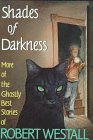
In addition to Charles L. Grant and Gahan Wilson, another author I used to fill out that Better World Books order (this is the last you'll be hearing about it, I promise) was Robert Westall.  I first encountered Westall's work last September, while reading the inaugural edition of the Stephen Jones/Ramsey Campbell Best New Horror, which included the novelette "The Last Day of Miss Dorinda Molyneaux."  I didn't find that story particularly innovative or spooky, but I did enjoy Westall's dry humor, and thought vaguely that I ought to buy one of his books if I came across a cheap copy.  Later that same month I read Simon Bestwick's fine ghost story collection, A Hazy Shade of Winter.  About a quarter of that book is taken up by the excellent novella "Until My Darkness Goes."  Not only is that novella dedicated to Westall's memory, but a fictionalized version of one of his books is the initial source the ghost.  My interest in Westall was redoubled.  Then came the BWB sale, where I was able to obtain both volumes of a posthumous best-of collection of Westall's "ghostly" stories.


That subtitle, "ghostly," is an apt one, for several of the included tales are not ghost stories in the obvious sense, and some aren't even supernatural.  What links them is Westall's gift for writing about regret, memory, and the weight of the past.  Many of these stories were originally published in books aimed at young adult audiences, but Westall never talks down to his audience and, like all the best young adult fiction, his stories can be enjoyed by a reader of any age.

What I like most about the stories in these two volumes is their range, both of subjects and of sympathy.  Westall can write a fine traditional ghost story about the mysterious residents of a small village and the old church that holds their secret ("St. Austin Friars"), but he can also write with authority about a ghostly soldier who links the first and second World Wars ("The Haunting of Chas McGill"), about a haunted toilet in a disused school ("The Boys' Toilets"), or about a gang of young bikers on a midnight ride ("The Night Out.").  More than that, he is able to write respectfully and kindly about all these characters.  Bikers aren't young toughs who deserve to punished, a cruel, controlling wife can be victim as well as villain, and the man who took an ancient photograph of a dead girl may not be the monster you expect.  It seems to me that too many writers use the ghost and horror story didactically, to complain about this or that group of people, or about the horribleness of "modern times" or "city folk" or what have you.  Westall can sometimes drift in that direction, but his sense of our common humanity is too strong for him to give in fully to that sort of bitter grumpiness.

But enough about humanity-- these are ghost stories, after all.  Are they scary?  Well, yes, I think that many of them are.  "Woman and Home" manages to turn a walk through a perfectly ordinary empty house into something remarkably tense, and "A Walk on the Wild Side" reminds us just how scary even a domestic cat can be.  There are, however, other kinds of atmosphere at which the ghost story can aim than fear, and Westall explores several of them.  Sometimes he writes about friendly ghosts.  Ordinarily I agree with M. R. James' remark that "amiable and helpful apparitions are all very well in fairy stories or local legends, but I have no use for them in a fictitious ghost story," but the one in Westall's "The Cat, Spartan" is unobtrusive enough, and the human characters so well if broadly drawn, that it works out anyway.  And the kindly spirits of "Graveyard Shift" are balanced by one who is very malevolent indeed, so that's all right.

Then there are a couple stories with religious themes.  As a rule I'm not big on those either, but Westall isn't preaching anything other than a very general morality, and is willing to accept characters in spite of their frailties.  In "Rachel and the Angel," a young girl's thoughtless wish brings a destructive spirit to her town, and the only way she can save it is to find righteous people.  This modern-day Sodom and Gomorrah plays out along familiar enough lines, but Westall knows how to make an angel frightening, and has a keen eye for the pathetic yet sympathetic sins of ordinary people.  "A Nose Against the Glass" finds an old man in his antique shop on Christmas Eve, from which the apparition of a child leads him out into the snow in search of something that may be redemption.  Now, if you described that plot to me, I'd be making sarcastic gagging noises and vowing never to read such a thing.  The reason I finished it and liked it is that Westall makes the antique dealer feel real.  He's not a Scrooge; he's a tired old man who can be happy or sad or cruel or kind depending on how his day goes, and Westall presents him in all his modes before leading him into strange events.  And the ending, which reverses the expected cliche somewhat, generates a melancholy atmosphere that makes the story infinitely more memorable.

Reversals of expectation are another of Westall's virtues.  One of the stories in Shades of Darkness makes you imagine evil that isn't really there, while another suggests a stock ghost story ending only to reject it in a way that sent a genuine shiver down my spine; a third mixes the ghost story with another genre to generate an unexpected conclusion.  And "The Last Day of Miss Dorinda Molyneaux," which was included in Demons and Shadows and which I liked a bit more this time around, has a nice little trick up its sleeve too.  A few stories feel too traditional-- "The Death of Wizards" offers the well-worn notion that being able to read others' thoughts wouldn't be much of a blessing-- but even in those cases, you can find small touches to enjoy.

Westall is also a master of what you might call the non-supernatural ghost story.  What is that, you ask (assuming you didn't give up two long paragraphs ago)?  Why, it's a story that achieves the atmosphere and literary "heft" of a ghost story without having anything definitely unnatural.  Glen Hirshberg's The Snowman's Children is a fine novel-length example; Oliver Onions' "The Honey in the Wall" is a shorter one.  Westall here offers several.  I've already mentioned "The Night Out," but there's also "The Making of Me" and "Gifts from the Sea," two haunting stories about what war, or a relative's memories of war, can do to young children.  And then there's "Fifty-Fafty," in which a folk tale about a tragic, ironic murder is the hinge for a meditation on injustice, history, and collective imagination.  The opening to that story is such a fine example of Westall's way with words that I'm going to include two pages of it:

Friday afternoons, my mother picked me up from school and we went shopping down the town. Out of our leafy suburb, down into the smoky jungle. Wondrous shops were there, full of dinky toys and pink ladies' corsets. But the poor were there too. Beyond the shops, all down to the river, they got poorer and poorer. In the lower depths they Drank, and had no drains; emptied their soapy washing-up water and worse straight into the furrows of yellow clay paths that trickled, in the end, into the black waters of the Tyne, iridescent with the sick beauty of oil and awash with broken fish boxes, where only the inedible blackjack swam, caught by boys who had no boots or shoes, and left lying to rot on the cobbled quays. Where dirty women hung out of windows and shouted incomprehensible things as you passed, and did incomprehensible things with sailors, then cut their throats as they slept and lifted their wallets and dropped their bodies straight into the river through trapdoors in their houses.
I don't remember how old I was. I know I had sadly abandoned hope of dragons. I had checked for wolves under the stairs and found only a sack of musty potatoes, and a meter with the faint exciting whiff of gas. But there were still monsters. The lamplighter walking in front of us was a minor wizard. He put up his long pole to the gas lamps and created darkness. It was broad daylight till the gas lamps flared instantly, night gathering around them like smoke. My own headmaster was a fabulous monster of sorts. Tiny, bent, wizened and silver-haired, we loved him. But the boys said that he had once been a six-foot sergeant major in the Welsh Guards, broad as a house with a voice like a bull. Till the gas got him, in the Battle of the Somme. And down the town there were much more satisfying monsters like Happy Ralph, who lurked at the bottom of Borough Road and rushed out at you with outstretched arms and incoherent cries, whether to embrace you or strangle you nobody ever lingered to find out. On Sundays, Happy Ralph went from church to church, roaming the aisles and terrifying the vicar in his pulpit and the spinsters in their pews.

A trackless safari into the dusk. But not without waterholes. First my Aunt Rose's house, only a little way into the jungle, where people still holystoned their doorsteps and polished their knockers daily. But Aunt Rose was definitely a denizen of the jungle, her living room long and dark as a dungeon, only a pale ghost of daylight trickling in past aspidistra and lace curtain, over the massive overstuffed three-piece suite crowded like cattle in a byre.

She gave us tea, which we balanced on our knees. She stayed on her feet, solid as a bullock in her flowered pinafore, hair in a tight black bun, and railed against God.

Like many YA writers, Westall is good with direct, accessible language that nonetheless offers a tinge of the poetic.  And-- I have to say it again-- he's very good with human foibles.  "The Red House Clock" offers a rough, illiterate father and his more intellectually inclined son, but their strained relationship avoids stereotype; "In Camera" features a strong-minded young policewoman, but she's not Tough-As-Nails, and Westall shows that she's as aware as anyone of her own short temper.  His characters are clear enough that younger readers can grasp them, but subtle enough that adults won't be bored.

So, strong prose, strong characters, and a deft hand with the ghostly in all its forms.  What's not to like?  As far as I can see, hardly anything.  If you enjoy YA fiction or ghost stories, do yourself a favor and add Robert Westall to your reading list.

Monday, February 21, 2011

The Cleft and Other Odd Tales

People who are more culturally literate than I am will know Gahan Wilson primarily as a cartoonist/illustrator.  However, he also writes the occasional spooky or fantastic short story.  I first noticed his work with the story "The Sea Was Wet as Wet Could Be," which was reprinted in Ellen Datlow's anthology Blood is Not Enough.  A sinister reinterpretation of Lewis Carroll's famous poem from Through the Looking Glass, it was a crisply told, enchantingly nasty story of idle rich people meeting a grim fate.  This, I've discovered, is a recurring feature in Wilson's fiction.  A paragraph from the opening of the story "Sea Gulls" will suggest the narrative voice and social world of many of Wilson's protagonists:
We had been sitting side by side on a large, sun-warmed rock, I in a precise but somewhat Redonesque pose, Geraldine in her usual, space-occupying, sprawl.  I was deep in a poetic revery, reflecting on the almost alchemical transition of sand to water to sky while Geraldine, my wife, was absorbed in completely finishing off the sumptuous but rather overlarge picnic the hotel staff had prepared for our outing, when she abruptly straightened, a half-consumed jar of pate clutched forgotten in her greasy fingers, and suddenly emitted that barking coo of hers which never has failed to simultaneously startle and annoy me throughout all the years of our marriage.
As you might expect, several macabre twists of fate are in store for both Geraldine and her scheming husband.  Like Roald Dahl and John Collier, Wilson delights in cruel humor and reversal of fortune.  In "Traps," rats take revenge on the exterminator who has targeted them; in "Leavings," two police detectives learn more than is good for them about the mysterious ailments of the local homeless population.  In the hands of a lesser stylist, these tales, many of which date from the 1960s and 1970s and were originally published in Playboy or Fantasy and Science Fiction, would feel passe, but Wilson's sharp prose makes for such quick, easy reading (I finished the 330-page book in about three hours) that there's no time to become bored with them.  And his ear for comedy is just great:
Lester fumbled uncertainly over the limited information he had at his disposal concerning the handling of the violently insane.  There was not much, but he did recall it was very important to humor them.  You've got to humor them or they'll go for the ax or the bread knife.
He's particular funny with first-person narrative by "friendly" rich women, as in the cat-themed story "Best Friends" or his mid-twentieth century version of "Hansel and Grettel:"
Well, anyhow, when they were very young, just as young as you are, there was a great financial depression and all those funny people you see when you're out in the streets were losing their jobs in amazing numbers and looking more ragged and dirty by the day.  Of course that was nothing near so bad as what was happening to people like ourselves, darlings, people who had real money to lose.

Hansel and Grettel's parents were starting to notice that there wasn't quite as much to spend as there used to be, and less all the time, and they realized they'd have to do something really serious about it if they wanted to avoid dipping into their capital, so just like that, they decided to kill their children.

Now, now, don't look at me that way, my dears.  It's only that sometimes grownups have to do things they'd really rather not.  It's just the way it is, so stop fretting.
But I don't want to suggest that this collection is all about the travails of the amoral upper class.  There are also stories about mad scientists, sinister ice cream men, small towns with odd habits, disappearing corpses, aggressive Martian vines, impossible giant statues, and a zombie-infested midway.  Wilson is able to make each of these as creepy or funny or downright weird as he wants.  A case in point is "The Marble Boy," a variation on the one of the oldest campfire ghost stories in the book.  But Wilson describes the central scare with enough originality that it becomes unsettling all over again.  Fans of the classical weird or sinister story will find much to admire in The Cleft and Other Odd Tales.

Sunday, February 20, 2011

Nightmare Seasons

Even though I seem unable to keep myself from buying books (34 this month, and it's not even over yet), there's always a long list of authors whose work I'd like to check out but haven't gotten around to yet.  Until recently, one name on that list was the late Charles L. Grant, known both as an author in his own right and as an editor of anthologies, including the widely-acclaimed Shadows series and the shared-world milieu of Greystone Bay.  I'd read a few Grant stories here and there and been quite impressed by them, especially "If Damon Comes," which was included in David G. Hartwell's mammoth anthology The Dark Descent.  That story, like a sizable chunk of the prolific Grant's work, is set in Oxrun Station, a fictional Connecticut where strange things happen all too often.  When I was looking for items to fill out a large order from Better World Books, I thought of Grant, and ended up ordering Nightmare Seasons and The Black Carousel, two collections of linked novellas set in Oxrun Station.  On Friday night I read all four novellas from Nightmare Seasons in a single feverish sitting.

Which is, in a way, somewhat surprising, since if you'd described the plots of those four novellas to me, I'd probably have said, "Ugh, really?"  In particular, the first of them would sound silly and awful, like a bad Stephen King knock-off, if I told you its concept in a couple straightforward sentences.  (It doesn't help that Grant's titles, while often charming, sometimes feel a little labored; that first novella is "Thou Need Not Fear My Kisses, Love".)  But what sets Grant's approach apart is his subtlety, which finds and exploits the highest dread in even the most gruesome situation.  His prose style, while not, I'm sure, to everyone's taste, seems to me to balance masterfully on the line between poetry and pretension.  Here, for instance, is the opening to the prologue of Nightmare Seasons, the framing device that links the four novellas:

Winter... and rain.
During the blade-sharp days of a January cold snap, during the hours when snow immobilizes and breath turns to short-lived fog, there are the dreams of summer, of green, of walking with no particular purpose except to savor across the playing fields of the park beneath hickory and ash and white birch of such luxuriantly thick foliage that even the stilled air seems hazed with mint.  In part it is a steeled defiance of a numbing temperature that reduces animals to hibernation and man to bitter complaint; and in part it is a hypnotic gesture to the pleading of one's senses for an earnest reassurance that this sort of weather will not last, that there will indeed be a time when warmth beyond the hearth is a reality in spite of the past that it seems now like nothing more, and nothing less, than an attic memory.
But there are worse times than the cold.
And there are worse illusions than memory.
There are the cruel teasing thaws that defy the season with a mercury grin; thaws that banish the snow, fill the streams, oftentimes clear the sky to a taunting deception of June's soft blue.
And when there is no blue, there is the rain.
I must confess, I like that a lot.  A similar gift for language runs through all four novellas, turning an attack by demonic bikers or an antagonist with the power to control lightning into something more than the 80s horror cliche it might initially seem.  Each novella is set in a different season a decade apart-- Spring 1940 through Winter 1970-- and small details of period and weather add to the atmosphere that Grant carefully builds.  And no matter how unusual the plot, the real focus is always on character.  Whether it's a woman trying to maintain her independence while juggling three suitors, an elderly postal employee with nothing ahead of him but work and death, or a young woman hoping to establish a career and friends while overcoming a tragic family history, Grant uses the length offered by the novella format to draw his characters deftly and sympathetically, so that the dark fates that swallow some of them are disturbing rather than garish.

If all of the above isn't enough of a hint as to how much I liked Nightmare Seasons, I'll add that the three latest books of this month's 34, ordered early this morning, were two more Oxrun novella collections and Night Visions 1, which also includes several stories by Grant.  They arrive on Wednesday, and I think I'm going to have a hard time not devouring the first of them that very night.  As far as I'm concerned, Charles L. Grant really is that good.

Noonday Sun: The Book of Bunk

This is the first in an irregular series where I'll review books that, while not horror fiction, may be of interest to this blog's readers for one reason or another.


The jacket copy of The Book of Bunk: A Fairy Tale of the Federal Writers' Project describes it as an "unclassifiable explosion of storytelling," and while that may be a little histrionic, I can confirm from personal experience that it's basically accurate.  You see, my bookshelves are arranged by genre, and having finished The Book of Bunk I was very much at a loss as to where to put it.  Glen Hirshberg's other books are in the bookcase set aside for horror fiction: The Two Sams and American Morons because they include ghost and horror stories, and the novel The Snowman's Children because, while not horror per se, its grim atmosphere and its focus on the weight of the past make it close enough to fit the bill.  The Book of Bunk, on the other hand, includes only a single fleeting incident that captures that tone, and while it's a heck of a scene, it's not enough to make the book horror.  In the end, I decided to put the book on my science fiction/fantasy shelves, where it now nestles between Theodora Goss's In the Forest of Forgetting and Robert E. Howard's The Coming of Conan the Cimmerian.  In a way it doesn't fit there either, because none of the book's events can really be called supernatural.  They're unlikely, in the best sense of the word, the "things should happen like this" sense, which is why the subtitle labels it "a fairy tale," but that's not the same thing.

The point here is that The Book of Bunk really is unclassifiable, in the best sense of that word.  As such, it's unfortunately no surprise that the novel was unable to find publication with a large press, and was released in a limited edition by Earthling Publications.  That edition is already out of print at the publisher, and I snagged what I believe to have been Amazon.com's last copy, but various specialty book dealers still have copies at or close to cover price.  I do hope that eventually a press with larger reach picks up this novel, because it deserves a much wider audience than a 415-copy edition can ever bring it.

The Book of Bunk is the story of Paul Dent, who, after burying his father, leaves behind college to ride the rails.  Before he knows quite what has happened, a young woman named Grace has hired him for the Federal Writers' Project, a branch of the WPA, and set him up in the small town of Trampleton, North Carolina, where he's supposed to research local history and geography for one of 48 state guides the Project is assembling.  But what Paul discovers in Trampleton in 1936 is a web of interconnected stories, too large, too strange, and too dramatic for any guidebook to capture them.  And the arrival of Paul's charismatic brother Lewis sets in motion a chain of events that will reveal secrets stranger still... and lead, in the end, to great tragedy.

That may not sound terribly interesting to you.  I'll confess that at first it didn't to me, either, which is why I took so long to acquire the book even though Hirshberg is one of my favorite writers.  And as I read the first half of The Book of Bunk, I was a little uneasy, wondering whether the gentle pace and quietly stylish prose would ever propel me toward something more interesting.  I also worried, based on the novel's framing story, that it would turn into a didactic parable about the value of art and the foolishness of certain politicians.  But then came the arresting, spooky scene I alluded to above, which was followed in turn by a revelation that added another layer of complexity to the carefully-constructed relationships among the novel's large supporting cast.  I read the last third of the book in a white heat, and closed it in awe at the multi-faceted ending, which combines violent resolution with subtle ambiguity and offers hope and melancholy in about equal doses.  This is a novel that takes in a lot-- sibling rivalry, race relations, government hearings, orphans, knife-juggling-- without feeling anything other than lean and poetic.  All this, and a cameo appearance by... but, as an Amazon.com reviewer points out, it would be churlish to give that away.  If this sounds at all promising, get your copy of The Book of Bunk while you can, because it won't be too long before the few remaining copies dry up and prices sky-rocket, and there is, alas, no guarantee that this fine literary-historical novel will find the wider publication it ought to enjoy.